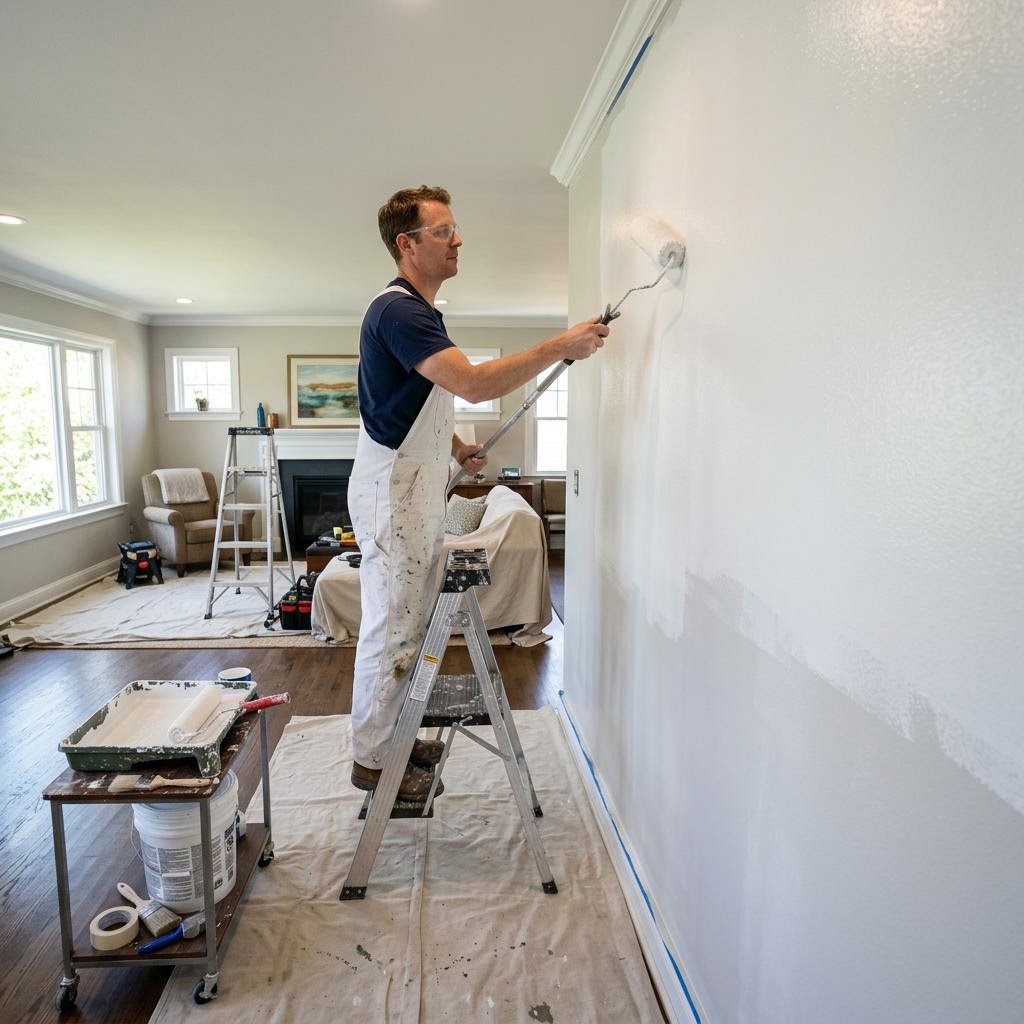
Set realistic expectations for paint touch-ups. Compare colour, sheen, age and lighting, then agree a trial area or whole-wall option with your painter.
A touch-up can be the right response to a small mark, but an identical colour name does not guarantee an invisible repair. The original product, sheen, ageing and application texture all influence what you see. Before buying a sample pot, gather the existing paint information and ask a painter how the repair can be assessed under the room’s normal lighting.
Find the original specification
Look for the brand, product line, colour formula and sheen on retained tins or invoices. A colour written on a note may be incomplete. Tell the painter whether the wall has been repainted or cleaned since the original work. Do not assume a product from another range has the same finish because the colour label matches. If records are missing, say so and discuss a matching process rather than inventing the specification.
Separate a mark from damaged paint
Explain whether the issue is a scuff, stain, patch or peeling surface. Ask whether appropriate cleaning should be considered before repainting, following the actual product’s care instructions. Do not scrub with an abrasive method on an unknown finish. A stain from moisture needs its cause resolved first. Painting a small area is not a diagnosis of dampness or a substitute for repairing a damaged substrate.
View the area in realistic light
Strong side light, glossy finishes and broad plain walls can make small differences more noticeable. Compare the area during daylight and under ordinary evening lighting. A patch that looks acceptable straight on may show from the doorway. Discuss what level of visibility is acceptable rather than requesting an absolute promise of invisibility. Photographs can help communication, but screens and camera exposure are unreliable colour references.
Agree a trial and an alternative
Ask whether a small trial with the specified product is practical and when the result should be reviewed. Wet paint is not the finished comparison. If a local repair remains visible, painting to a natural boundary or a whole wall may be a better option. Clarify the extra scope before work starts. Do not keep adding different products or layers yourself in an attempt to force a match.
Keep the result documented
Request the final product, colour and sheen details and retain them for future maintenance. Follow the manufacturer’s cure and cleaning guidance rather than treating new paint as ready for immediate scrubbing. The cited manufacturer guidance provides finish and care context, not a guarantee that an aged surface can be matched perfectly. A successful touch-up decision balances acceptable appearance, preparation and the practical extent of repainting.
For a property-specific discussion, contact our touch-up painting team with the details you have gathered.