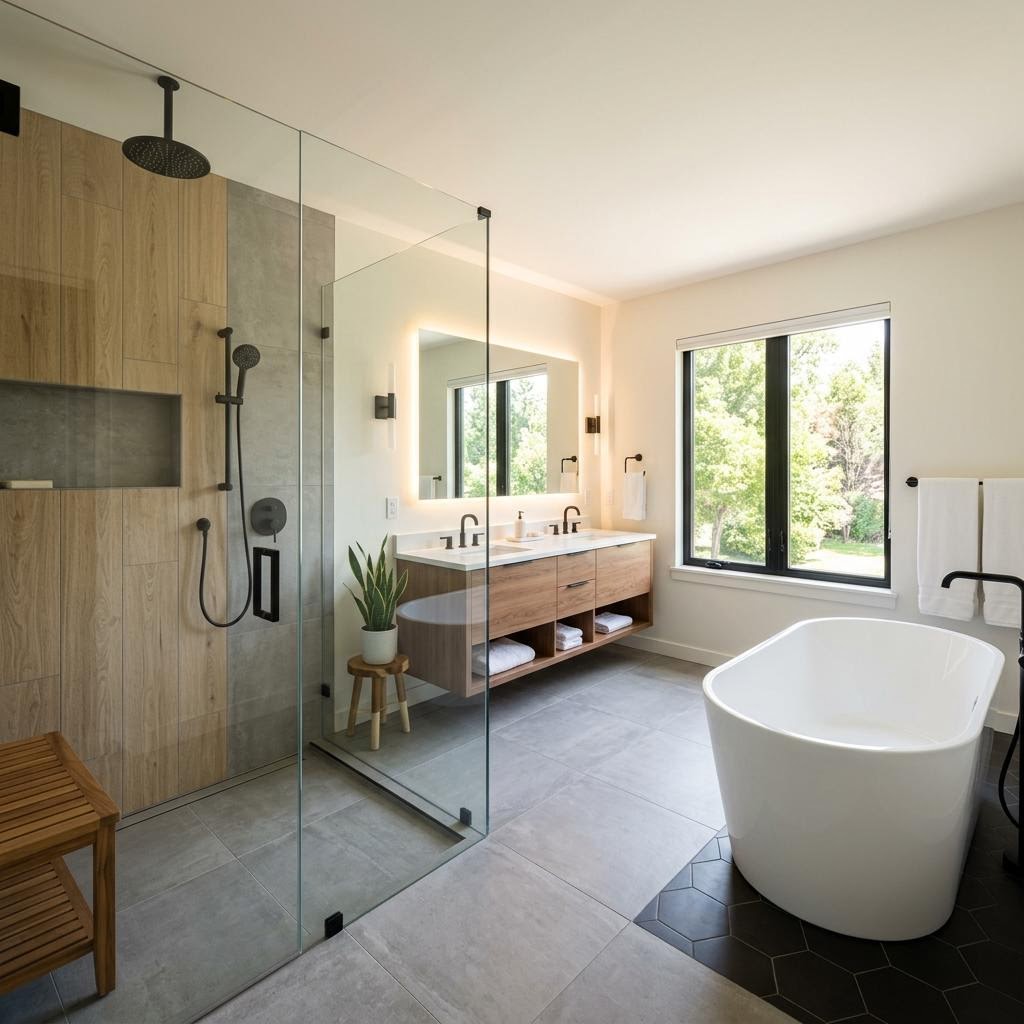
Choose bathroom tiles using floor and wall suitability, drainage details and maintenance. Compare actual specifications before committing to a visual style.
Bathroom tiles should be chosen for their location and care requirements as well as their appearance. A wall tile and a shower-floor tile may need to perform different roles. Begin with the bathroom plan and ask the tiler to assess the shortlisted products against the complete installation. A fashion photograph does not reveal the substrate, drainage details or product limitations behind the finish.
Label each surface separately
Identify shower walls, shower floor, general floor and decorative areas on a simple plan. Ask the supplier whether each tile is intended for the proposed use and request supporting product information. Do not assume all tiles in one collection have identical suitability. If the design mixes sizes or finishes, make the boundaries clear so the tiler can assess transitions and ordering requirements without interpreting an informal mood board.
Discuss floor geometry
Drains, falls and the room shape influence how tile size and set-out can be resolved. A large tile may create different cutting and detailing requirements from a smaller format. Ask the tiler to explain the proposed layout before ordering. The ARDEX bulletin illustrates substrate and handling concerns for particular large-format porcelain products; it does not prescribe the design of your bathroom. Professional assessment remains necessary for the complete wet area.
Compare maintenance realistically
Ask about cleaning products, surface texture, staining sensitivity and any sealing requirements for the actual material. Consider the grout and sealant as part of the care routine, not only the tile face. A pale sample may show different marks from a patterned one, while a textured floor may need different cleaning. Do not assume a gloss or matt label alone establishes cleaning effort or safe performance in every wet condition.
Coordinate waterproofing and fixtures
Tile selection does not replace waterproofing design or plumbing coordination. Share the final fixture plan and discuss where cuts, edges and joints will appear. Existing dampness needs investigation before new work covers the area. Do not remove tiles yourself to check the base. Ask which trades are responsible for preparation and how the sequence is managed, especially when only part of an existing bathroom is being changed.
Confirm the order and handover
Approve the actual tile, orientation, joint colour and edge details with the tiler. Ask how quantities and suitable spares are determined from the layout. Keep batch and product information where available, since later matching can be difficult. Follow the selected products’ cure and care instructions. The best choice is a documented system suited to the room, not simply the tile that appears most striking on a small display.
For a property-specific discussion, contact our bathroom tiling team with the details you have gathered.