A damaged panel and a failing fence line need different solutions. Learn what to record safely and how posts, ground conditions and boundaries affect the scope.
A broken paling may be a local repair, while leaning posts can affect several otherwise tidy panels. The right response depends on what has failed and whether the remaining structure can support a reliable repair. Judge the whole fence line, not only the most obvious damaged piece.
Keep clear of unstable sections
Observe from a safe distance and keep children and pets away from leaning panels, sharp edges and loose gates. Do not push a fence to test it, remove structural pieces or try to straighten a storm-damaged section yourself.
If the fence forms a pool barrier or protects a drop, treat damage as a safety issue and seek prompt professional advice. Keep people away from the hazard; do not assume a temporary patch is compliant. Photograph the visible condition only where you can do so without approaching an unstable area.
When repair may be practical
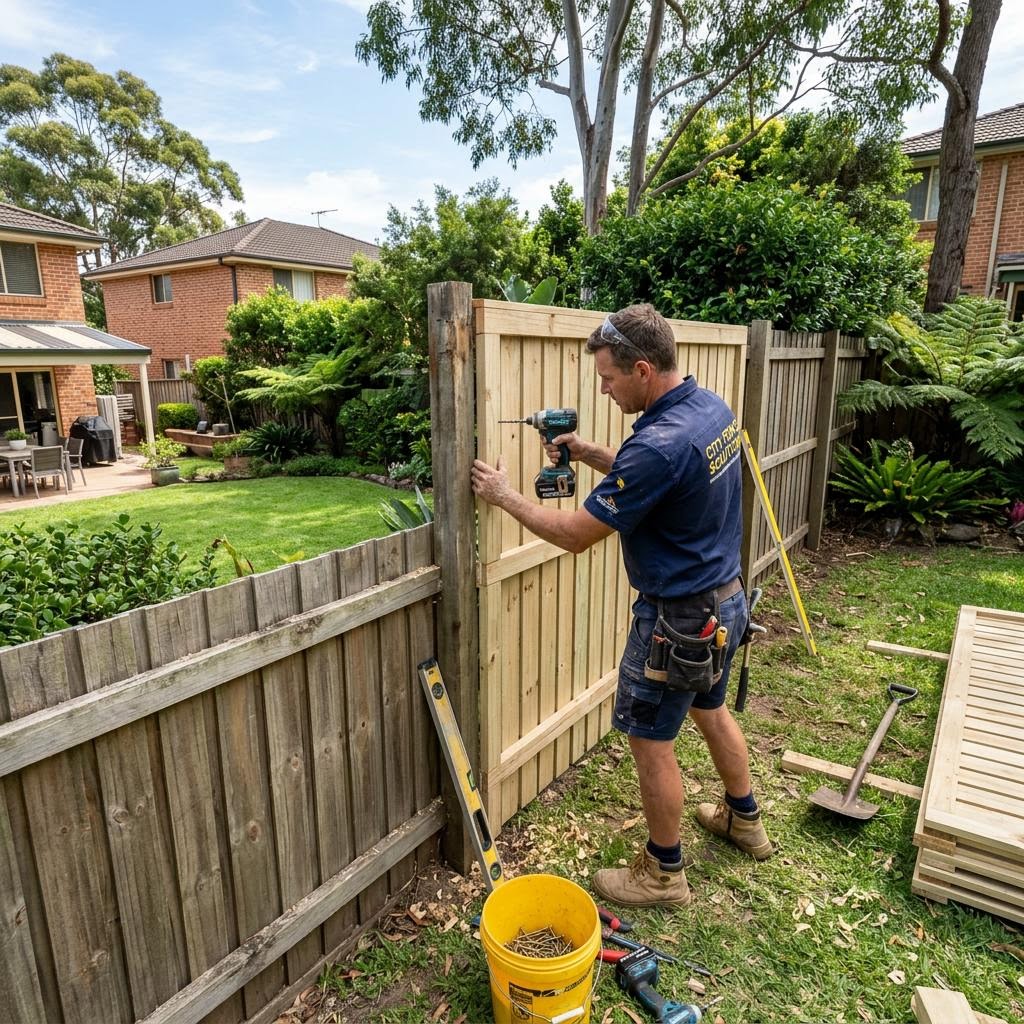
An isolated damaged panel, gate fitting or small number of palings may be repairable if the posts, rails and adjacent sections are sound. A contractor should check whether replacement components can be fixed securely to the retained structure.
Ask how the repair will match the existing material and appearance. Weathered timber and older metal finishes may not match new pieces exactly. A cosmetic mismatch is different from a structural problem, so make your priorities clear when discussing a local repair.
When a wider replacement deserves assessment
Several leaning posts, widespread deterioration or recurring failures may make piecemeal repairs less practical. Ground movement, drainage, tree growth and adjacent retaining structures can affect the fence and may need investigation.
- Are the posts or only the infill sections affected?
- Has the same location failed after a previous repair?
- Is the gate pulling on an already weakened post?
- Does the proposed work interact with a retaining wall or change ground levels?
Do not assume a replacement fence will solve unstable ground or a retaining wall problem. Ask whether another professional needs to assess the cause before the fence scope is finalised.
Resolve the boundary and scope before work
Use fence repair and replacement services for an on-site assessment and written options. For a shared boundary, discuss the proposal with the neighbour and clarify the boundary position and approvals before committing.
Check applicable council, strata and pool-barrier requirements where relevant; requirements depend on the site. Confirm removal, disposal, access and protection of nearby planting. Ask whether gates, posts and finishes are included. Keep records of the agreed scope rather than assuming a contractor’s quote decides boundary ownership or how costs must be shared.