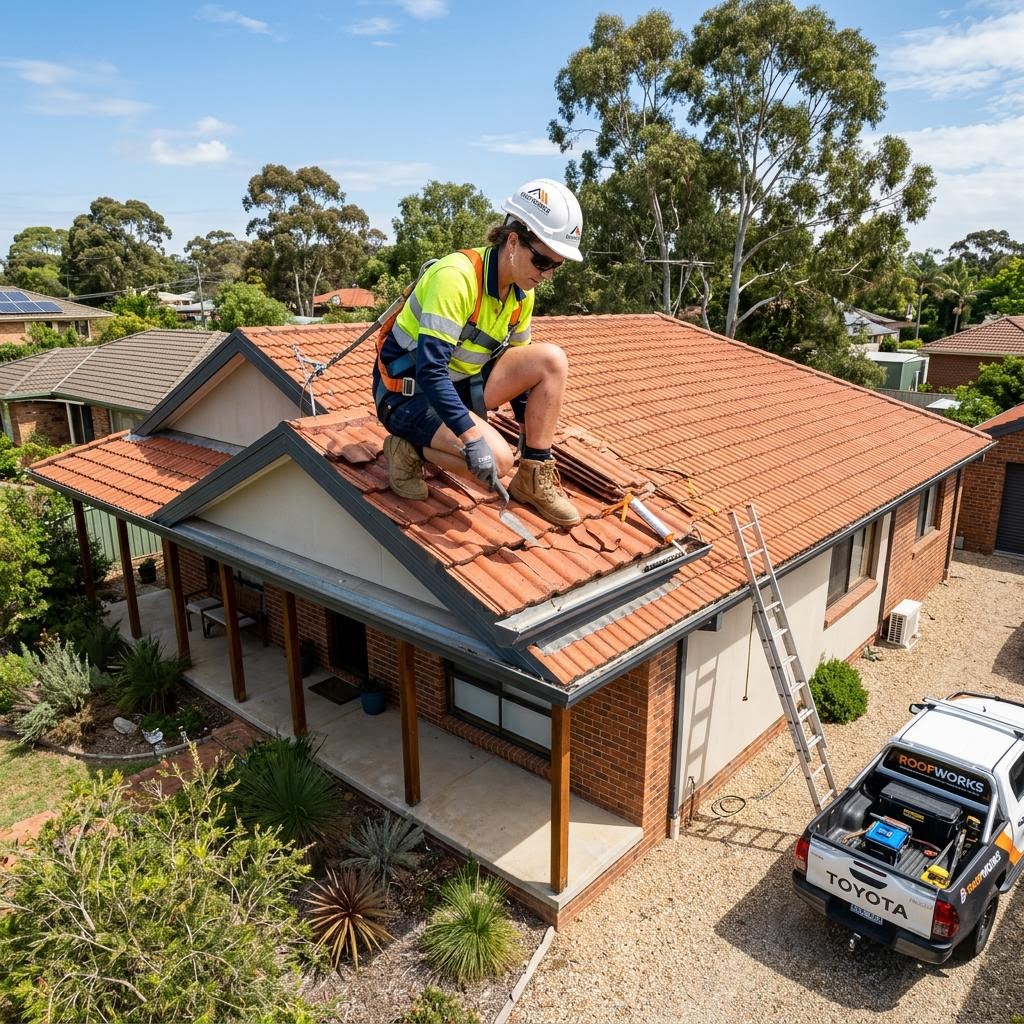
Use a roof inspection report to separate confirmed findings, access limits and priorities. Ask for evidence and a clear repair scope before approving work.
A useful roof inspection report helps you decide what to do next. It should distinguish observed condition from assumptions and explain the limits of the inspection. A list of faults without locations or priorities can be difficult to act on. Ask for enough context to understand the recommendation, while recognising that some concealed conditions require further investigation.
Check what was inspected
Look for the property, inspection date, roof areas and access method. Ask whether the report covers coverings, flashings, gutters, visible structure or only selected areas. Inaccessible sections should be identified. A ground-level visual check and a close inspection are not equivalent, and neither automatically establishes the condition of concealed elements. Safe access is the professional’s responsibility; you do not need to climb up to confirm the report.
Link each finding to a location
Photographs are more useful when labelled with the affected area and an explanation of what is visible. Ask which findings are confirmed defects, potential concerns or maintenance observations. A close-up without context may not show the extent of the problem. If a leak source is uncertain, the report should say so rather than converting every possible entry point into a definite diagnosis or automatic replacement recommendation.
Ask for practical priorities
Request an explanation of what needs prompt attention, what can be planned and what requires monitoring or another specialist. Urgency should be connected to the finding and consequence, not an unsupported sales deadline. If the report identifies immediate safety concerns, follow the professional’s access advice. Do not postpone an unsafe condition merely to obtain a decorative finish quote, and do not treat a non-urgent recommendation as proof nothing can change.
Separate investigation from repair
Some findings may require further access, tests or structural advice before a repair can be specified. Ask what uncertainty remains and how additional work is authorised. A repair quote should identify the affected areas, materials, preparation and exclusions. Compare alternatives against the same findings. If two recommendations differ, ask each professional to explain the evidence rather than choosing solely by confidence, price or the number of photographs supplied.
Keep a complete decision record
Retain the report, quote, approved variations and handover information together. Confirm who handles permissions, equipment on the roof, waste and internal damage where relevant. After work, ask which findings were addressed and which remain outside the scope. An inspection report is a record of accessible conditions at a point in time, not a guarantee that no future leak, storm damage or concealed problem can occur.
For a property-specific discussion, contact our roof inspections team with the details you have gathered.